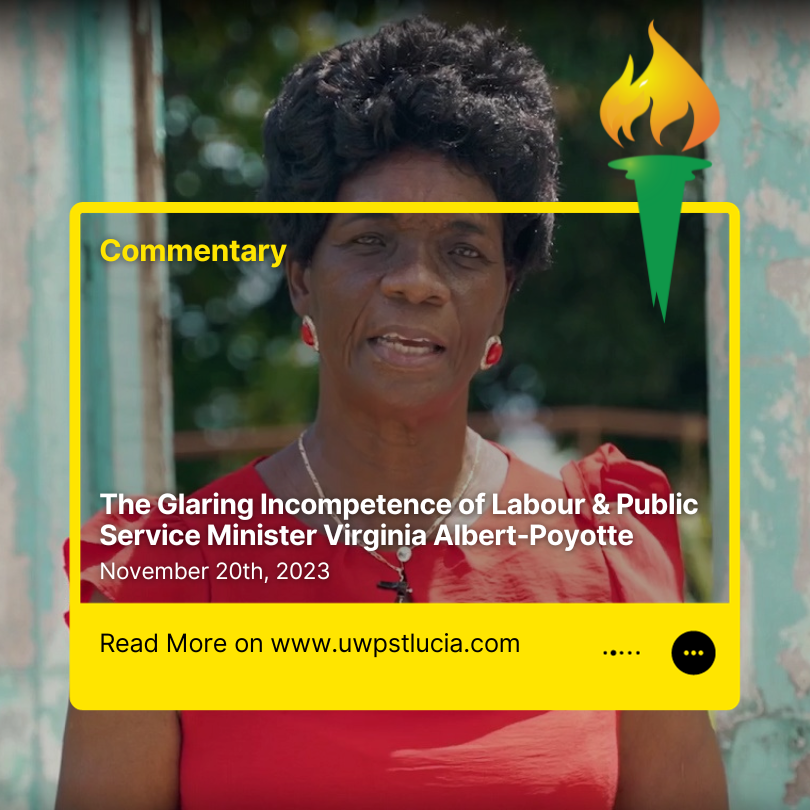
In the realm of public service, effective leadership is paramount to fostering a harmonious work environment and ensuring the smooth functioning of government departments. Unfortunately, the tenure of Labour Minister Virginia Albert-Poyotte has been marked by a series of troubling events, with multiple government agencies resorting to industrial action under her watch. This pattern not only raises concerns about her ability to lead but also reflects poorly on the overall management of Labour and the Public Service during the past 2.5 years.
One of the most glaring issues during Minister Albert-Poyotte’s leadership has been the persistent industrial actions taking place across various government entities. The National Conservation Authority, NIC workers, staff at St Jude Hospital, and doctors at OKEU Hospital have all expressed their discontent through strikes and protests. Now, adding to the list of grievances, are the staff employed with the Ministry of Labour itself. This disturbing trend cannot be ignored and necessitates a critical examination of the Minister’s leadership style.
The most recent and alarming addition to this disconcerting trend is the industrial action taken by the Ministry of Labour’s own staff. This ironic development underscores a lack of confidence in Minister Albert-Poyotte’s ability to manage internal matters within her own ministry, casting a shadow on her credibility and effectiveness in overseeing the broader labour and public service portfolios.

Corruption plagues Saint Lucia’s Citizenship by Investment Programme
During the UWP’s 5 year term between 2016 and 2021 a total of 871 Citizenships were sold. In contrast, the SLP has sold over 14,000 Saint Lucian citizenships in their first 3 years! This means that US$1.4 Billion or EC$3.7 Billion is now unaccounted for under Minister Ernest Hilaire and Prime Minister Philip J Pierre. Where is the money? This…
Read more
by Content Manager